


Teen Dating: Helping Your Teenager Build Healthy Relationships
Dating is a subject that always comes up once a teenager reaches high school, if not sooner depending on the family.
There are a lot of ideas out there regarding when and if teenagers should be dating. Interestingly, research suggests that whether or not a teen actually dates, having the freedom to make that choice is linked to healthy adult relationship outcomes (either path is considered normal and healthy).
Allowing your teen to date while in your house comes with a whole lot of benefits. The main benefit is that you can help your teen mold their relationship skills and make sure they are dating safely!
Letting Teens Choose — and Guiding Them Along the Way
-
Communicating in a hurtful or threatening way
Mistreating
Love Bombing
Isolating partner from others
Controlling
Acting different on the phone (text) vs in person
Gaslighting
Lack of desire to label the relationship
-
Healthy communication
Respectful of parents and teen
Trustworthy
Honest
The couple can spend time apart from each other
Make choices together
One of the hardest parts parents may find if allowing teens date is the allowance to choose freely who they want to date. However, this can be beneficial as it allows room for the parents to ask questions about the partners in order to help the teens decipher exactly what they want in a partner.
The parents can help teens notice red and green flags. They can help their teen with standards lists in regards to what kind of person they ultimately want to end up with. They can help teens set boundaries as sometimes teens can fall into the obsession category quickly and will need to learn how to make sure they do not drop everything for a new relationship. The list can go on, but, ultimately, having a hand in shaping how your teen dates could be a great thing.
Dating with Purpose: Purity, Safety, and God's Design
One of the most important parts of teens dating is this: Teens should be safe in dating.
They should understand being pure and staying safe in relationships is the way God intended for relationships. While dating should not feel like a list of rules to follow, it’s important to remember that the goal of dating is marriage. God is the one who created marriage so He does get to set the rules! And He has good reasons for His rules, which means helping your teens understand the importance of following them.
Another great thing to do is surround your teens with mentors or role models with healthy relationships themselves. Teens need a role model when it comes to relationships. If possible, be that role model yourself. Show your teens what a good marriage and a good relationship look like by making your marriage one they would want for themselves!

Part 1: When Becoming a New Creation Isn’t the End of the Healing Journey

Written by Mariana Guice,
a member of the MPC Community Education team and also a peer advocate
Lately, I have been reflecting on trauma and the authority we have in Christ to experience true healing. As believers, we celebrate the promise found in Scripture that we are a new creation in Christ (2 Corinthians 5:17). But what happens when we embrace that truth while quietly leaving our deepest wounds untouched? What happens when we believe we are made new, yet avoid inviting Jesus into the places that still carry pain?
Before I go any further, I want to make something clear. I wholeheartedly believe in the power of Jesus Christ to heal, deliver, restore, and transform. I believe His blood is sufficient for every wound, every chain, and every broken place. I believe the Holy Spirit is still bringing freedom to captives today. Yet I've begun asking myself a difficult question:
When if what we call "healing" actually avoidance?
For many years, I unknowingly answered that question by saying, "That happened twenty years ago. I'm a new creation now. That isn't who I am anymore." While there is truth in that statement, I eventually realized I was using biblical truth to protect myself from biblical transformation. Instead of allowing Christ to gently uncover old wounds, I was covering them with spiritual language, especially in places where I felt my choices led me to.
God, because He is faithful, has been showing me that becoming a new creation does not erase my need to surrender every hidden part of my heart to Him. Healing is not pretending the wound never existed. Healing is allowing the Great Physician to touch the places we've spent years trying to keep hidden.
Recently my prayer has simply been, "Lord, make me a woman after Your own heart." Now I just laugh because that prayer has brought me into places I didn't realize I had locked away. He hasn't condemned me. He has been revealing what my heart has been protecting for years. I lived apart from Christ for thirty-five years before surrendering my life to Him. Even after walking with the Lord for over a decade, I find myself asking why I still believe my ways of coping are sometimes better than His ways of healing. The answer, I think, is that trauma often teaches us that survival is safer than surrender.
Only recently have I begun to truly believe that I am safe in the presence of God. That safety has become the foundation for healing. It is in that place of trust that the Holy Spirit performs the delicate surgery my soul has needed all along. God's healing is never rushed, never forceful, and never rooted in shame. He restores with compassion, patience, and perfect love.
Why "The Porn Talk" Can't Wait: A Parent's Guide
What Is Pornography, and Why Does This Conversation Matter?
Porn is the depiction of sexual behavior in books, pictures, videos, and other media that is intended to cause sexual excitement. Many parents do not even want to use the word around their children/teens because they are scared that if they talk about it then their children will become curious and seek it out.
Research shows the opposite to be true. Why? Because if your child has any type of connection to the outside world, s/he has probably been exposed to it before you even think to bring it up. The average age for first exposure is 6 or 7 years old. Even if you keep your child off electronics/internet at home it doesn't guarantee that s/he will not be exposed. It's everywhere. It's a conversation that has to happen.
This isn't just anecdotal — a national study by Common Sense Media found that most teens have already seen pornography, many before the age of 13, and that teens who talk with a parent or trusted adult about sex learn far more from that relationship than they do from pornography itself. In other words, staying quiet doesn't protect kids — it just leaves porn as their default teacher.
Starting the Conversation with Young Children
The conversation does not have to be an in-depth depiction of what porn is starting at a young age. As a parent, you can ease your children into the idea.
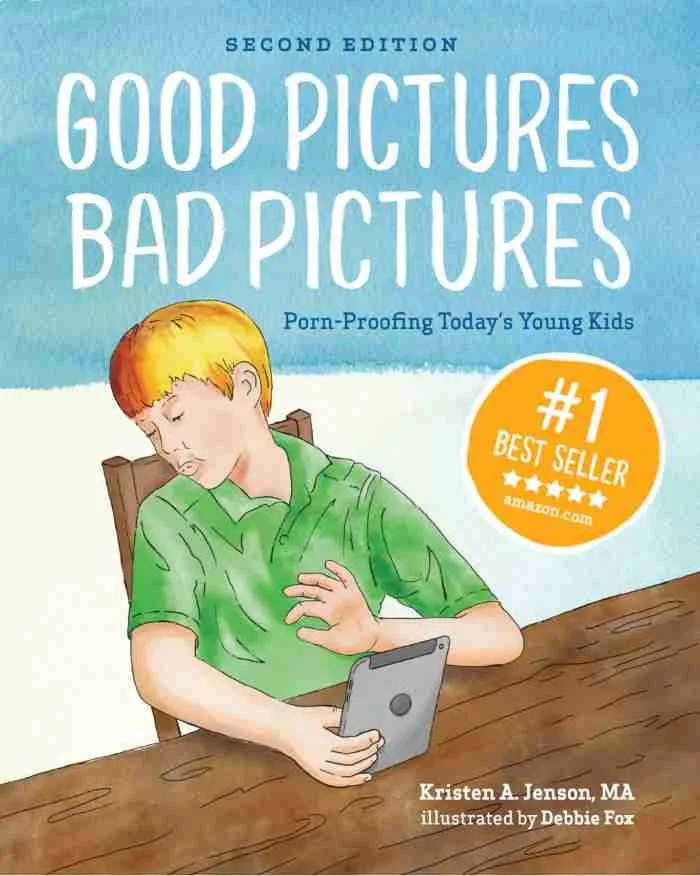
There is a great book by Kristen Jenson called Good Pictures Bad Pictures that can be helpful to get you started. The concept is to begin the discussion with the idea that there are some things (pictures) that we should not be viewing even as adults! It helps build confidence in children to know the difference and to feel comfortable sharing with you if they do see it.
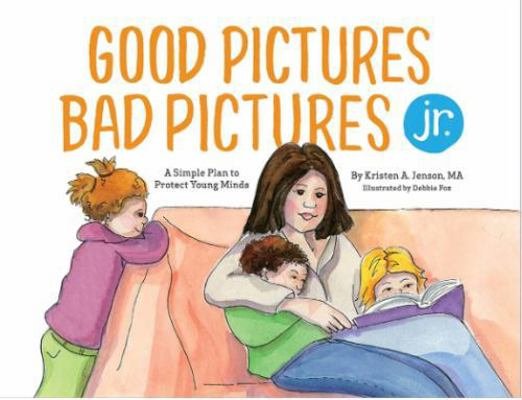
For even younger children, Jenson also wrote Good Pictures Bad Pictures Jr., designed for kids ages 3 to 6. It uses gentle, age-appropriate language to teach children a simple "Turn, Run, Tell" plan: TURN away from a bad picture, RUN to a trusted adult, and TELL them what they saw. It's a great way to give your youngest kids a first line of defense, long before they can fully understand what pornography is.
Talking to Teens Who Haven't Had "The Talk" Yet
If you are already a parent of a teen and haven't had the conversation yet, it is not too late. The chance that your teen has not been exposed is low, but opening that door to being able to talk about this tough topic allows the teen to know s/he can come to you if s/he has questions.
Keep Shame Out of the Conversation
Remember in these conversations to never make it seem shameful. Once shame enters the picture, open dialogue and vulnerability exits. Make sure your teen knows that they can come to you if this is something s/he ever struggles with and that you can help them.
The Bottom Line
Open the door, have the tough conversation, be awkward. If you don't, someone else will.

What Is Emotional Abuse? Recognizing the Signs of Gaslighting, Love Bombing, and Unhealthy Relationships
What is emotional abuse?
Emotional abuse is one of the hardest types of abuse to spot. When people talk about abuse in relationships the types that usually pop into the mind are sexual or physical abuse. Therefore, emotional abuse often runs under the radar.
Like most abuse, emotional abuse is all about power, control, and manipulation. It also follows typical abusive patterns—sometimes to the point where it can be predicted. And overtime it may be seen as cyclical: The perpetrator abuses, asks for forgiveness, a honeymoon period starts, and then the abuse is done again.
Some of the most common signs of emotional abuse:
the victim walking on eggshells
the perpetrator getting angry when approached about problems
the perpetrator minimizing abusive behavior
blame-shifting, victim playing (“I guess I’m just a horrible person”)
love bombing
gaslighting.
Here we will focus on the last two: love bombing and gaslighting.
Love Bombing
There are two main types of love bombing.
Someone comes on thick and fast at the beginning of the relationship. It can be gifts, acts of love, etc. that is over the top and too much too soon.
A last-ditch effort to save a relationship. One person starts to pull away so the other love bombs to keep the other in the relationship. Once things are good again, the love bomber slows down with the love bombing until the other person again starts to pull away and then the cycle starts all over again. It might be said that it is the thrill of the chase. And the cycle continues until the relationship reaches its inevitable end.
Gaslighting
Anyone who has raised kids has experienced gaslighting at some point in their parenting.
Any of this sound familiar?
You are looking at your toddler who is covered in chocolate, and you ask, “Who ate the chocolate”?
While it’s obvious who ate the chocolate, your sweet and messy child adamantly argues he has no idea who ate the chocolate.
Emotional abuse gaslighting often looks like the perpetrator causing the victim to question their own view of the world. The perpetrator often can make the victim to believe he or she is crazy. And once that is fully believed, the victim stops talking to outside people because he or she is really worried it’s true! At times the victims even get to the point of gaslighting themselves into thinking they are the abuser.
The truth of love
As Christians, we have a very clear explanation of what love should look like in scripture
“Love is patient, love is kind. It does not envy, it does not boast, it is not proud. It does not dishonor others, it is not self-seeking, it is not easily angered, it keeps no record of wrongs. Love does not delight in evil but rejoices with the truth. It always protects, always trusts, always hopes, always perseveres.”
1 Corinthians 13:4-7
The word “always” is repeated throughout that scripture. Why? Because love should be consistent. There is no cycle, there are no major ups and downs, there are no traps. This is the kind of love we should strive for and should give to others.
What to do if you are in an unhealthy relationship
First: Make sure you have a safe person outside of any relationship. Be brave and confide your concerns with this person. Be open to listening and hearing their response.
If you are not at the point where you feel comfortable reaching out for help yet, or you feel stuck, then Step 1 is to put the behavior into the context of why it took place. Seek to understand the goal or intent of the behavior. Do the behaviors you’ve experienced raise red flags for abuse?
Second: Reach out to others for help. That can look like a parent, friend, pastor, therapist, or coach. Sometimes we need outside help to fix an inside problem.
Third: As we always say in the classrooms: Abusive relationships must end.
There is no hope of them fixing while you are still together. That does not mean forever, but it must be for right now. Separate, do work on yourselves, then come back together and see if the relationship can be saved.
In the end, emotional abuse is extremely common, especially among high school and college relationships. One in three high school relationships has abuse in it, and that includes emotional abuse.
If you see it in yours, get help. We’d love to be that person for you.